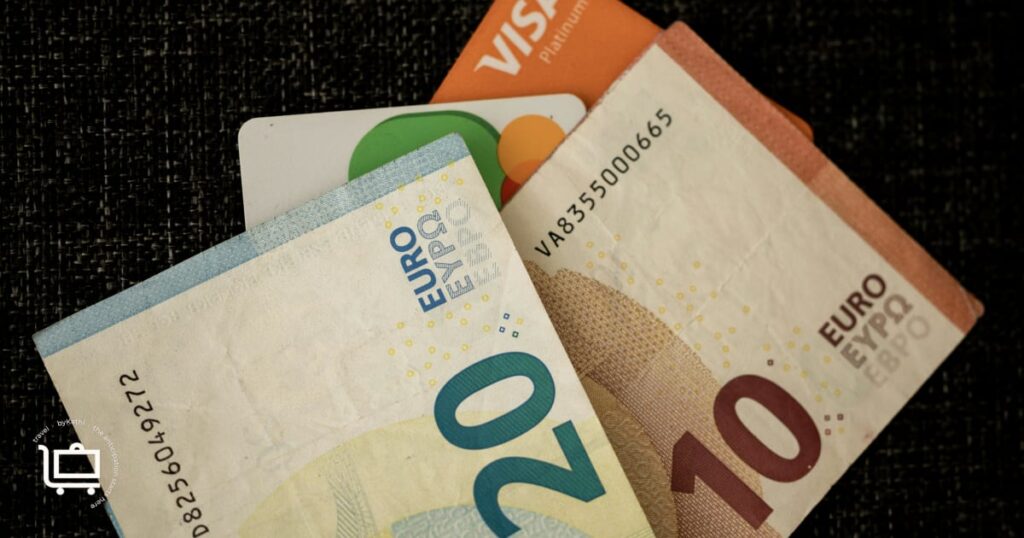
The big picture on handling money in Europe is covered in Your Card Will Work. Probably. A Guide to Money in Europe — ATMs over airport kiosks, notifying your bank, Dynamic Currency Conversion, never traveling with only one card. All of that applies in Italy.
Italy adds some texture worth knowing before you land.
The Cards That Actually Work
Visa and Mastercard are your cards for Italy. Both are widely accepted in cities, at hotels, at most restaurants, and at major tourist sites.
American Express is accepted at a reasonable number of places in the cities, particularly hotels and upscale restaurants, but you cannot count on it at a neighborhood trattoria or a market stall. Do not make it your only card.
Discover has very limited acceptance in Italy. Leave it as a backup at best.
Contactless payment (tapping your card or phone) is increasingly available in Italian cities, but adoption is less consistent than in Northern Europe. In smaller towns and in the south, cash is still king. Have your chip card ready and do not assume tap will work everywhere.
One note on ATMs: the Italian banking network is called Bancomat. You will see the Bancomat logo on machines throughout the country. Use ATMs attached to actual bank branches rather than the standalone tourist machines near major attractions. The standalone machines tend to charge higher fees and are more likely to push Dynamic Currency Conversion by default.
Cash Is Not Optional in Italy
Italy has a genuine cash culture, and it runs deeper the further south you go.
In Rome and Milan, cards are broadly accepted. But even there, the neighborhood bar, the market vendor, the small alimentari around the corner from your hotel: cash preferred, sometimes cash only, and occasionally with a minimum card amount posted on a small handwritten sign you will not see until you are already committed.
In Naples, Sicily, and smaller towns throughout the south, assume cash first. Many excellent restaurants, particularly the ones that are not trying to impress tourists, simply do not take cards. Many markets are cash only. Public restrooms at tourist sites charge a coin, usually one euro, and the coin slot does not negotiate.
A practical daily habit: keep twenty to thirty euros in accessible bills and a small supply of one-euro and fifty-cent coins in a pocket. Not buried in your bag. Accessible. You will use them for restrooms, markets, coffee counters, and the occasional situation where a card terminal is temporarily not working.
The Bar: How It Works
The Italian bar is not a place you go to drink in the evening. It is where you get coffee, a pastry, a quick lunch, or an afternoon Aperol spritz. And most of the time, you pay before you order.
Walk to the register, tell them what you want, pay, take the receipt, bring it to the counter. The barista makes your coffee, you drink it standing. It is fast, it is efficient, and once you know the rhythm it feels completely natural.
No tip is expected at the bar counter. If you want to leave a small coin, it is appreciated. It is not expected.
Tipping: The Full Picture
Italy has a tipping culture, but it is calibrated differently than what Americans are used to.
Restaurants: Your bill will include a charge called the coperto. It is a per-person cover charge, typically one to three euros per person, for the bread, the table, and the experience of sitting and being served. It is already in the bill. It is not optional and it is not a tip. Tipping on top of it is not expected. If the meal was exceptional and you want to leave something, a few euros on the table is appropriate. The reflexive 20 percent is not the norm and will confuse your server.
Taxis: Round up to the nearest euro or two. A fare of 11.50 euros becomes 12 or 13. A percentage tip is not expected.
Hotel housekeeping: One to two euros per night, left on the pillow or nightstand each morning when you leave the room. Leave it daily. The person cleaning your room today may not be the same person who cleaned it yesterday.
Tour guides: Five to ten euros per person for a group tour. More for a private guide or a full-day experience. Italy has extraordinary guides at the major archaeological sites, the Vatican, the museums. If yours was genuinely excellent, tip accordingly. This is the tip that matters most and the one most often underpaid by travelers who have already spent freely at every restaurant.
Porters and doormen: One to two euros per bag.
The general principle: tip for service that required effort and judgment. Not out of habit, not out of guilt, not because the commercial said you should.
None of this is complicated. Italy is not trying to trick you. The bar system is logical once you know it. The coperto is on the bill. The taxis want a rounded number. The tour guide who made Pompeii come alive for you deserves a few euros at the end. Handle the practical stuff before you land and you will spend your actual trip thinking about pasta and piazzas, which was the idea all along.