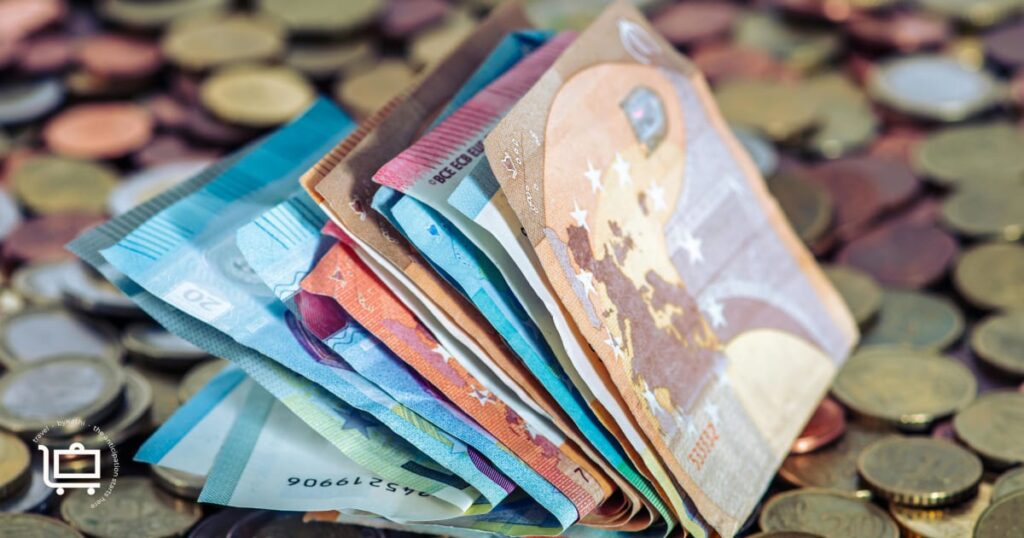
The big picture on handling money in Europe is covered in Your Card Will Work. Probably. A Guide to Money in Europe — ATMs over airport kiosks, notifying your bank, Dynamic Currency Conversion, never traveling with only one card. All of that applies in Paris exactly as it does everywhere else in Europe.
What Paris adds is a little texture. Here is what is worth knowing specifically before you land.
The Cards That Actually Work
Visa and Mastercard are your cards for Paris. Full stop.
You will see the Amex commercials. You will see the Discover ads. Do not count on either at a Paris restaurant, a neighborhood boulangerie, or a museum gift shop. They are sometimes accepted at larger hotels and chain establishments, but “sometimes” is not a plan when you are hungry and your only card just got declined.
If Amex or Discover is your primary card at home, bring a Visa or Mastercard as your Paris card. This is not negotiable advice.
In 2022, contactless payment (tap your card or phone) was widely available in Paris, including on the metro and at most cafes and shops. It worked reliably. Use it freely.
One note on the BNP Paribas network: if you are using an ATM in Paris and your debit card runs on the PLUS or Cirrus network, BNP Paribas machines are your most consistently networked option. They are easy to find throughout the city. If you are hunting for an ATM and you spot a BNP Paribas branch, that is your machine.
Cash and Coins: The Paris Reality
Paris is more card-friendly than much of France, but cash earns its keep in ways that will catch you off guard if you arrive without any.
The most reliable one: public restrooms. Throughout Paris, at major tourist sites, in the metro, near the big sights, you will encounter coin-operated restrooms. Typically 50 cents to one euro, paid to an attendant or into a slot. The green standalone sanisettes around the city are free and self-cleaning. The ones at Versailles, Notre-Dame, and similar sites are coin only. Keep a small supply of 50-cent and one-euro coins accessible (not buried in your bag) every single day.
Smaller neighborhood shops, the boulangerie around the corner, the outdoor market stalls on a Sunday, the man selling crepes on the street: cash preferred, sometimes cash only, often with a minimum card amount if they take cards at all. This is not a hardship. It is Paris. Having twenty euros in your pocket at all times is just how the day works.
The cafe culture question comes up: do you need cash at a Paris cafe? Usually not — most cafes accept cards. But at a neighborhood spot away from tourist areas, cash is often expected and appreciated. When in doubt, have it.
Tipping: The Full Picture
The France rule most Americans learn is service compris — the 15 percent service charge is included by law in your restaurant bill. That is true and covered in detail in Your Card Will Work. Probably.
What people do not always cover is everything outside the restaurant.
Taxis: Round up to the nearest euro. A fare of 13.40 euros becomes 14. A fare of 22 euros becomes 23 or 24 if the driver was helpful with bags or got you through traffic cleverly. A percentage tip is not expected and would seem odd.
Hotel housekeeping: One to two euros per night, left on the pillow each morning when you leave the room. Leave it daily, not as a lump sum at checkout. The person cleaning your room on Tuesday may not be the same person cleaning it on Thursday. Daily means the right person gets it.
Coat check and restroom attendants: One euro, in the small dish provided, every time. This is not optional if you use the service. The attendant working the coat check at a Paris restaurant or the restroom attendant at a major venue is doing actual work. The coin in the dish is the acknowledgment.
Tour guides: Five to ten euros per person for a group tour. More for a private guide or a full-day experience. If your guide was exceptional, and in Paris the good ones really are, go higher. This is the tip that matters most, and it is also the one that is most overlooked by Americans who have already tipped generously at every restaurant all week.
The restaurant reminder: When you get your bill, look for service compris. It means the service charge is included. If you want to leave something more because the meal was wonderful, round up: 37 euros to 40, or 62 euros to 65. Leave it in cash on the table rather than adding it to a card charge. The 20 percent American instinct will confuse your server and is genuinely not appropriate.
The behavior that goes with all of this, how to order, how to get the check, what French waiters are actually like, is a different conversation. That one lives in Fitting In in Paris.