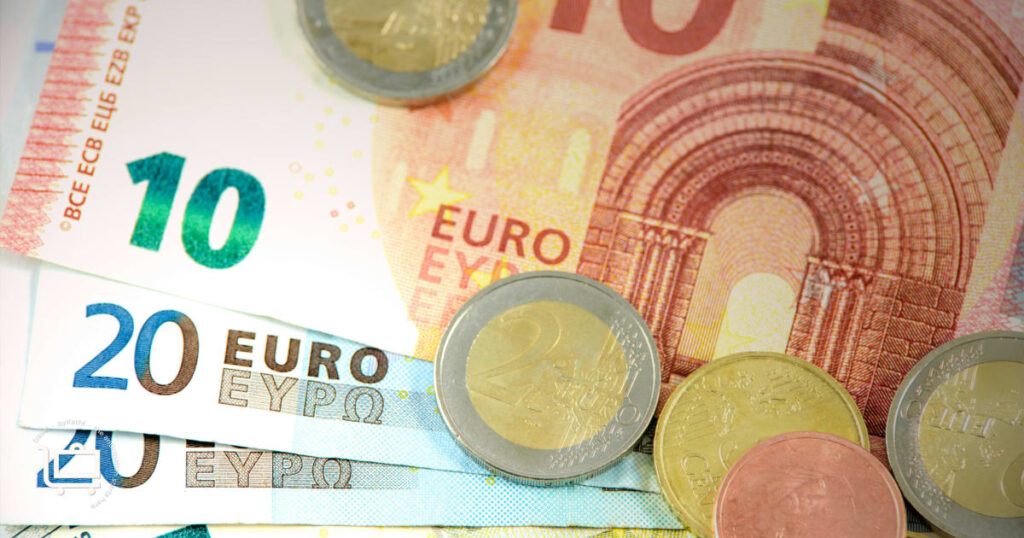
I have sat in a room full of adults being briefed on an upcoming international trip and watched people be genuinely surprised that England does not use American dollars. I share this not to be unkind, because it was a room full of smart, capable people who simply had not thought about it yet. It is a good reminder that the practical stuff, the money stuff, is worth sorting out before you land rather than after. Here are the money tips every European traveler actually needs.
Here is what I have learned over multiple trips to Europe, the hard way and the easy way both.
The Euro Is Not the Only Currency in Europe
This is the part that trips people up. Europe is not a single currency zone. Most of the countries you are likely to visit use the euro, including France, Italy, Spain, Portugal, Germany, and most of the EU. But some do not.
As of this writing, England uses the pound sterling, Switzerland uses the Swiss franc, and Norway, Sweden, and Denmark have their own currencies. Before any trip, take thirty seconds to confirm what currency the country you are visiting uses. The EU and the eurozone are not the same thing, and finding that out at the airport is not the moment you want to find it out.
Get Familiar With the Euro Before You Go
It might be just me, but I freeze when trying to count cash on demand in a foreign country and end up looking like a five-year-old, holding out my hand and letting the person at the register take whatever they need. Don’t be like Kathi.
Before you leave home, spend ten minutes with Google Images. Search “euro money system” and look at the results, especially the coins. The one-euro and two-euro denominations are coins, not bills. Paper currency starts at five euros. Both the coins and the bills are different sizes, which helps you tell them apart once you are actually handling them.
When amounts are spoken, you will hear something like “five euro fifty” for 5.50 euros. When written, the decimal point is replaced with a comma, so that same amount appears as 5,50. It takes a minute to get used to, and then it becomes second nature.
Skip the Airport Kiosk: Use an ATM Instead
Do not exchange money at the airport kiosks. The fees are genuinely terrible, and there is no reason to do it.
Your best option is to use an ATM once you are in the country. ATMs are widely available throughout Europe, including at airports. Look at the back of your debit card for the network name, things like PLUS, Cirrus, STAR, or LINK, and use an ATM that carries that logo. In France, BNP Paribas is one of the most commonly networked banks for American travelers. Once you identify which network your bank uses, you can search for an ATM locator for that network before you leave home. It is easier to remember “BNP Paribas” than a random address when you are jet-lagged and dragging luggage.
If you prefer to arrive with some euros already in hand, contact your bank before the trip. Most banks do not keep foreign currency on the shelf and may need to order it for you. That can take up to three weeks. Do not wait until the week before.
Notify Your Bank Before You Leave
This one matters more for some travelers than others. If you travel internationally often, your bank probably already knows your pattern. But if this trip is a departure from your normal routine, if you live and spend in the Midwest and suddenly show up charging things in London, your bank’s fraud system may flag it as unusual and freeze your card at exactly the wrong moment.
It takes five minutes. Call your bank, log into the app, or use the website to set a travel notice for every card you plan to bring. Most apps make this easy now. It is not as critical as it used to be, but it is still worth doing, and it costs you nothing.
Never Travel With Only One Card
We had fraud on one of our cards while we were in London. It had nothing to do with the trip or with London. Some guy in Alabama just decided charging on our card was a good idea. The bank caught it and froze the card, which was exactly what it should do. But if we had not had a second card, we would have been in a genuinely difficult situation with no access to funds.
Bring a backup. Two different cards from two different networks if possible. Keep them in separate places, not in the same wallet. If one is lost or compromised, you have options.
Check Your Cards for Foreign Transaction Fees
Before you leave, look at each card you plan to bring and check whether it charges a foreign transaction fee. Many travel-oriented credit cards have eliminated these fees entirely. Debit card transactions often still carry them, typically two to three percent of every purchase. That adds up faster than you expect over ten days.
Visa and Mastercard are widely accepted throughout Europe. American Express has less consistent acceptance, especially outside major cities and tourist areas. Discover has very limited acceptance in Western Europe, France and Italy in particular, and is not a card to rely on abroad. If either of those is your primary card at home, bring a Visa or Mastercard as your European card.
The One Thing to Watch at the Register: Dynamic Currency Conversion
When you pay by credit card, you may be offered a choice: pay in the local currency or pay in US dollars. It sounds convenient. It actually is convenient, it removes the mystery of what the charge will look like on your statement. But that convenience can cost you, because what it actually does is let the merchant apply their own exchange rate to the transaction, which is consistently worse than what your bank would give you.
This is called Dynamic Currency Conversion. It happens at restaurants, hotels, shops, and museums. The answer is always to pay in local currency, euros, pounds, whatever is local, and let your bank handle the conversion. Every time.
Cash Still Matters
Cards are widely accepted in major European cities, but cash still matters, and in some places it is the only option. Smaller shops, outdoor markets, street food vendors, and smaller cafes often prefer cash or have minimum card amounts. In more rural areas and smaller towns, cash may be the norm. Always have some on you. Not a lot. Enough for a meal, a museum, a taxi, and the occasional restroom that charges a coin to get in.
Public restrooms in many tourist areas charge a small fee, usually one to two euros, paid to an attendant or into a coin slot. Coins earn their keep in Europe. Keep a small supply in an accessible pocket.
Tipping: Less Than You Think
Tipping customs vary across Europe, and each country has its own norms. The short version for American travelers is this: you will tip less than you do at home, and that is correct.
In France, cafes and restaurants are required by law to include a 15 percent service charge in the check. This appears as service compris on your bill. The server has already been compensated. Leaving a 20 percent tip on top of it is not expected and will likely confuse everyone at the table. If you feel compelled, rounding up to the nearest euro or nearest ten, like 37 euros rounded up to 40, is appropriate and appreciated.
In Italy, the coperto is a per-person cover charge already included in your bill. Same principle: the service is accounted for.
For guided tours and private experiences where someone has worked hard to make your day exceptional, tipping is expected and welcome. A few euros per person for a half-day tour is appropriate, more for a full day or a private guide. But the reflexive American 20 percent on every restaurant check is not the norm across Europe, and it is not the expectation.
If Something Goes Wrong
Carry the address and phone number of your hotel written down somewhere that is not your phone. Write it on a card, tuck one in your wallet, put another in an inside pocket of your bag. If your phone is dead or gone, you can show the card to a taxi driver or a helpful stranger without having to spell the street name in a language you do not speak. We made cards for everyone in our group before we left for Paris. It is one of the smartest things we did.
Know the emergency numbers before you need them. Across the EU, 112 works from any phone, including a phone with no SIM card or no cell service. In France specifically, the police number is 17, fire is 18, and ambulance (SAMU) is 15. SMS for deaf or hard-of-hearing travelers is 114. Store these before you leave.
None of this is complicated. It just requires a little attention before you leave home. Handle it early and you will not think about it again once you land.