Part of why I plan the food when I plan a trip is the same reason I would not go to Tennessee and order clam chowder. You could. The restaurant might even have it on the menu. But why would you, when Tennessee does other things far better, things you cannot get with the same intention anywhere else? Food is regional everywhere, and the version made by the people who grew up making it, in the place it comes from, is almost always the one worth seeking.
Italy makes this easy to understand and hard to ignore. The country has more distinct regional food identities than most Americans would ever guess, and the version of Italian food we know at home, the red sauce and the pasta and the chicken parmesan, is really Italian-American: a translation made by immigrants who arrived in a country of abundance and cooked the food of their villages with more of everything than they had ever had before. The result is genuinely good. But it is a translation, and like most translations, it left things out.
When Americans say Italian food, we mean something specific, and it is not quite what you find in Italy.
We mean red sauce. We mean pasta with meatballs. We mean chicken parmesan, which does not exist in Italy in the form we know it. We mean the food that came to this country with the wave of Italian immigrants who arrived between 1880 and 1920, most of them from the southern regions of Campania, Sicily, and Calabria. They were poor, they were hungry, and they arrived in a country where meat was abundant and cheap in ways it had never been at home. The food they made here was the food of their villages adapted to new abundance. The tomato-heavy, pasta-heavy, generously portioned tradition we think of as Italian is actually Italian-American, and it represents one corner of one part of a country with more regional food identities than most Americans would ever guess.
We are not wrong to love it. It is genuinely good. But it is a translation, and like most translations, it left things out.
Why Italy Is So Regional
Italy as a unified country is younger than the United States. Unification happened in 1861. Before that, the peninsula was a patchwork of city-states, kingdoms, duchies, and republics that had been doing their own thing for centuries. Venice was a maritime trading empire with connections to the Arab world and the Silk Road. Naples was the capital of the Kingdom of the Two Sicilies and one of the largest cities in Europe. Bologna was a medieval university city, the oldest in the world. Sicily was colonized in turn by Greeks, Arabs, Normans, and Spaniards, each of whom left something in the soil and on the table.
The food of each place formed during that long period of separation, shaped by what the land produced, what the sea offered, what the trade routes brought in, and who came through and stayed. By the time Italy became a country, the culinary identities were already centuries old. You do not create a unified food culture by drawing a border. The polenta and risotto of the north, the ragù and pizza of Naples, the couscous-influenced dishes of western Sicily, the olive oil and bitter greens of Puglia: these did not merge. They remained themselves.
The geography reinforced it. The Alps seal off the north. The Apennines run the length of the spine. Sicily and Sardinia are islands. These are not soft regional variations like the difference between Kansas City and Memphis barbecue. These are distinct climates, distinct agricultural traditions, distinct everything. The cooking reflects the land it came from, and the land is profoundly different from one end of the country to the other.
And then there is the matter of Italian identity itself. Italians are regional in a way that is active and present, not nostalgic. A Roman does not remember that carbonara belongs to Rome the way an American might remember that their grandmother’s recipe was special. They know it belongs to Rome the way they know their name. The dish is still made the way it was made, by the people it belongs to, in the place it comes from, and the idea of someone in Milan putting cream in carbonara is not just wrong, it is offensive.
You were not expecting a side of Italian history with your dinner discussion, were you? But here we are, and it matters, because what is on your plate in Rome is not what is on your plate in Palermo, and understanding why makes the food taste better.
A Note on American Pizza
Before we go further, it is worth pausing on pizza, because pizza is the one Italian food Americans feel we know, and our relationship with it illustrates exactly the point.
Americans do understand regional food variation. We know Chicago deep dish and New York thin crust are different things. We know New Haven coal-fired pizza is its own category, and that Detroit square is different again, and that the pizza you grew up on in your particular city has a character that you will defend if pressed. We have real regional pizza culture in this country, and we are proud of it.
What is interesting is that we made this distinctly American thing and we still call it pizza, and we still reach for it when we think of Italian food. The pizza we know is Italian-American, descended from the Neapolitan tradition but transformed over a century into something our own. And when Americans arrive in Naples and eat actual Neapolitan pizza, the reaction is almost always the same: it is both familiar and startlingly different. The crust is soft and charred and floppy in a way that does not hold up to toppings the way we are used to. The tomato is bright and barely cooked. The mozzarella is fresh and wet. There is restraint to it that American pizza abandoned somewhere along the way.
That is not a criticism of American pizza. It is a genuinely great food. But it is a reminder that the bucket we call Italian food is larger and more varied than we have been led to believe, and that the original is worth encountering on its own terms.
Rome: The Pasta Capital
Rome’s food culture is built on a short list of dishes made with a very specific set of ingredients, and Romans will tell you, without embarrassment, that the rest of the world has been getting them wrong.
Carbonara is the one most Americans have encountered and most confidently misunderstood. The real version is eggs, guanciale (cured pork cheek), Pecorino Romano, and black pepper. No cream. No pancetta as a substitute for guanciale, though pancetta is acceptable when guanciale is unavailable. No parmesan, or at most a small amount alongside the Pecorino. The creaminess comes from the emulsion of egg yolk and rendered pork fat, not from dairy. It is technically demanding, it is deeply satisfying, and it is Roman.
Cacio e pepe is even more minimal: Pecorino Romano, black pepper, pasta water, and technique. The sauce is made from cheese and starchy pasta water and nothing else, and achieving a smooth emulsion rather than a clumped mess requires skill and practice. Restaurants in Rome that do it well are doing something genuinely difficult. The ingredient list is three items. The execution is everything.
Amatriciana comes from the town of Amatrice, a few hours from Rome, and has been adopted as Roman. Guanciale, San Marzano tomatoes, Pecorino Romano, a little white wine, black pepper. No onion in the traditional version, though Romans argue about this. It is the one red sauce on this short list, and it earns its place.
Gricia is amatriciana without the tomato, which makes it older: guanciale, Pecorino, black pepper, pasta water. It is the ancestor of both carbonara and amatriciana, and in Rome it is taken as seriously as either.
Supplì are fried rice balls with a filling of tomato ragù and mozzarella, elongated in shape, with a crisp fried exterior. They are a Roman street food and they are very good. They are not arancini, and Romans will make this distinction clearly.
Order these dishes in Rome. Order them at a trattoria, not a tourist trap. Ask where the locals eat. The difference between a plate of carbonara made by someone who grew up making it and a plate made for tourists who will never know the difference is significant, and you deserve the real one.
Naples: The South on the Plate
Naples is the city that gave the world pizza, and Naples knows it. Neapolitan pizza has a protected designation of origin. The dough must be made a specific way, the tomatoes must be San Marzano, the mozzarella must be fior di latte or buffalo mozzarella from the Campania region, and the cooking must be done in a wood-fired oven at a temperature high enough to produce the characteristic charred crust in ninety seconds. This is not fussiness. It is the standard that produces the thing.
Eat pizza in Naples. Eat it standing at the counter of a neighborhood pizzeria. Order the Margherita before you order anything else, because the Margherita is where you see what the crust and the tomato and the cheese actually taste like without distraction. If the Margherita is transcendent, the rest of the menu will be too.
Beyond pizza, Naples is a city of extraordinary street food and extraordinary poverty side by side, and the street food reflects that history. Sfogliatella is a shell-shaped pastry with a filling of ricotta, semolina, and citrus peel, with hundreds of thin flaky layers that shatter when you bite through them. There is a riccia version (the shell shape with the flaky pastry) and a frolla version (a smoother shortcrust shell). The riccia is the one worth seeking. Eat it warm, from a bakery that makes them fresh.
Ragù napoletano is a long-cooked meat sauce that bears almost no resemblance to what Americans call meat sauce. The meat is cooked whole, not ground, in a tomato base for hours until it falls apart. It is the Sunday lunch of Naples, the thing that has been on the stove since morning. It is not a quick weeknight dinner. It is a commitment.
Naples is also the gateway to Pompeii, the Amalfi Coast, and the islands, and the food of the broader Campania region includes some of the finest produce in Italy. The San Marzano tomatoes, the buffalo mozzarella from the fields around Caserta, the lemons of the Amalfi Coast. The region knows what it is doing with ingredients, and the cooking reflects it.
Sicily: The Island at the Crossroads
Sicily’s food is unlike anything else in Italy, and unlike anything else in the Mediterranean, because it draws from everything the Mediterranean brought to its shores. The Greeks colonized it. The Arabs ruled it for two centuries and left behind citrus, almonds, saffron, and the sweet-and-sour flavor combinations that still run through Sicilian cooking. The Normans came, then the Spanish. Each culture left something. The result is a cuisine that is simultaneously very Italian and very unlike the rest of Italy.
Arancini are the thing to know before you arrive in Palermo. They are fried rice balls, but they are not supplì. They are larger, often round (in Palermo) or cone-shaped (in Catania, where they are called arancine, and yes, the gender of the word is part of the argument). The filling varies: ragù with peas and cheese, or butter and prosciutto, or other regional variations. The exterior is breadcrumbed and fried to a deep golden crust. They are a meal, not a snack, and they are the thing you eat standing at a bar in Palermo at eleven in the morning because the morning demanded it.
Cannoli in Sicily are not the cannoli of Italian-American bakeries, though those are descended from them. In Sicily the shells are fried to order and filled with fresh ricotta that has been sweetened and sometimes combined with candied citrus or chocolate chips. The key is fresh. A cannolo that has been sitting filled for hours is a different and lesser thing. Find the bakery that fills them as you order, and eat it immediately.
Pasta alla Norma is one of the great pasta dishes of the Mediterranean: pasta with roasted eggplant, San Marzano tomatoes, fresh basil, and ricotta salata (a firm, salty pressed ricotta). It is Catanese in origin, named after the opera by Bellini, also from Catania, as a testament to how beautiful it is. It is simple and it is magnificent.
Granita in Sicily is not gelato and not sorbet. It is a semi-frozen dessert made from water, sugar, and fruit or other flavorings, with a texture that is coarser and icier than sorbet and served with a brioche for dipping. The almond granita in particular is extraordinary. The coffee granita with cream is a breakfast that will recalibrate what you think breakfast can be.
The street food of Palermo deserves its own afternoon. The Ballarò and Vucciria markets are among the most vivid food markets in Europe. Panelle (chickpea fritters), crocchè (potato croquettes), stigghiole (grilled intestines, for the adventurous), sfincione (the Sicilian street pizza, thick and spongy with onions and anchovies). The Arab influence shows up in the spicing, the sweet-and-sour combinations, the use of dried fruit and nuts in savory dishes. Eat without a plan. Point at things. The market will take care of you.
The North: A Different Country at the Table
The food of northern Italy is so different from what Americans mean by Italian food that it can feel disorienting. No tomatoes to speak of. No dried pasta in the same starring role. The north is the land of fresh egg pasta, butter rather than olive oil, rice and polenta, and slow-braised meats in wine sauces.
Milan is risotto country. Risotto alla Milanese is made with beef bone marrow, white wine, Parmigiano-Reggiano, and saffron, which gives it the deep gold color it is known for. It is served as a first course, not a side dish, and it is made to order, which is why good risotto takes time at the table. Milan is also where cotoletta alla Milanese originated: a breaded veal cutlet, fried in butter, served with a lemon wedge. Austrians who occupied the city in the nineteenth century brought it to Vienna, where it became Wiener Schnitzel. The Milanese will tell you this. They are not modest about it.
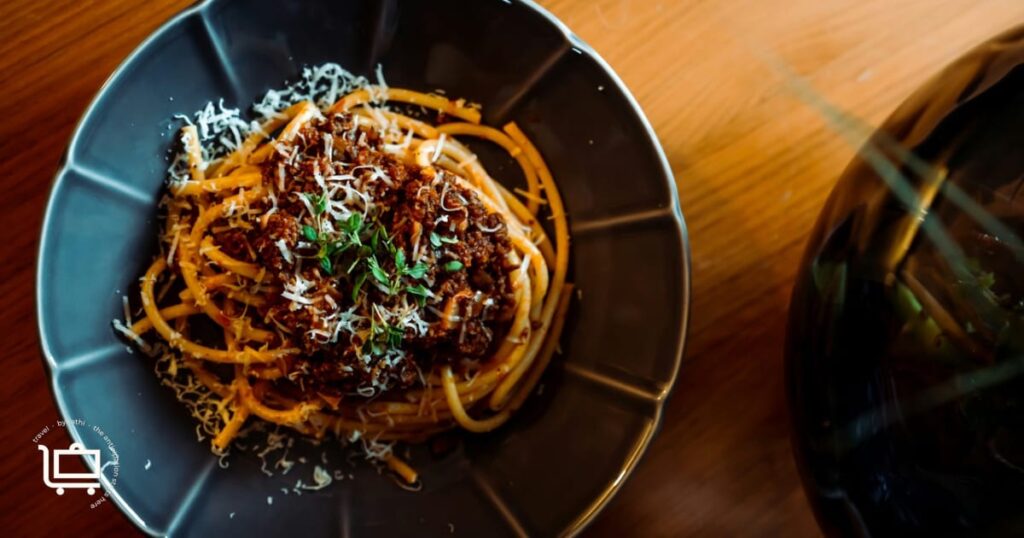
Bologna is arguably the most serious food city in Italy, which in Italy is saying a great deal. Mortadella is from here (not bologna, the American deli meat that takes its name from the city and bears only a passing resemblance to the original). Tagliatelle al ragù is from here, and in Bologna the ragù is made with a combination of beef and pork, long-cooked in white wine and milk, served over fresh egg tagliatelle. It is not spaghetti Bolognese. Spaghetti Bolognese is not a thing in Bologna. The Bolognese chamber of commerce once registered the official width of tagliatelle as 8mm when cooked, because these things matter.
Parma is where prosciutto di Parma and Parmigiano-Reggiano come from. You do not need to go to Parma to find these things, but you will find them fresher and more varied here than anywhere else. The prosciutto aged in the hills around the city has a sweetness and delicacy that the export versions only hint at.
The General Principle
Ask what is local. Ask what is made here. When you sit down at a restaurant anywhere in Italy, before you reach for the menu, ask your server what is typical to this place, this city, this region. The answer to that question will almost always be better than whatever you had already decided on.
Italy rewards this kind of attention. The country is organized around the idea that where something is made is part of what it is. The wine, the olive oil, the cheese, the cured meat, the pasta shape: all of these have places they belong, traditions they carry, and versions of themselves that are best in the specific spot they came from. This is not mysticism. It is the accumulated knowledge of people who have been feeding themselves and their families in a particular piece of ground for a very long time.
You cannot eat all of Italy in one trip. But you can eat all of wherever you are, and you can eat it well, if you pay attention to where you are.