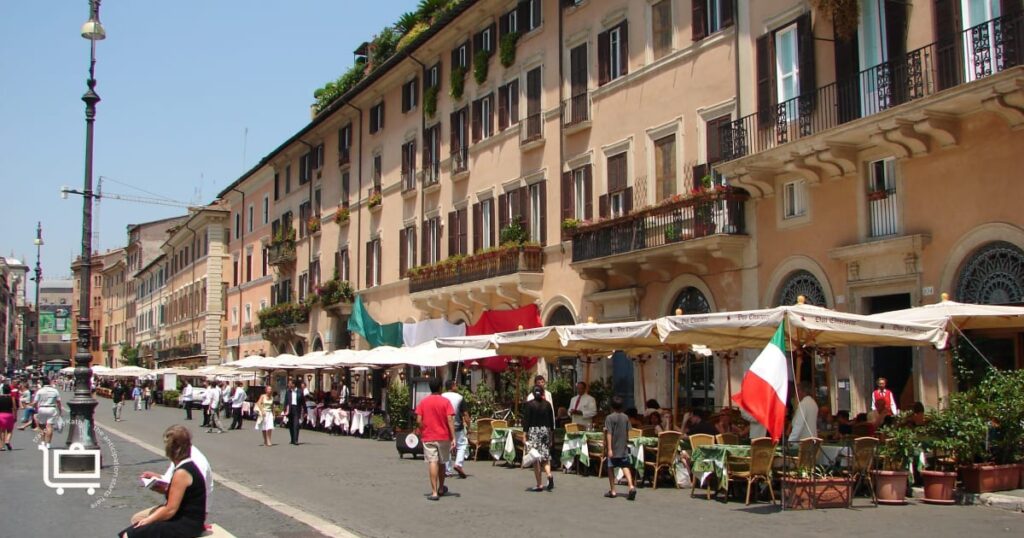
Every place has a system. A pace. An unspoken agreement among the people who live there about how the day is supposed to move. When you travel, you are stepping into someone else’s rhythm, and the faster you find it, the less you interrupt it, and the more you actually enjoy being there.
This is not about being a perfectly well-behaved tourist. It is about self-awareness. About noticing that you are a guest in someone else’s daily life. The commuters moving through the station have somewhere to be. The person behind you in the coffee line is not interested in a customization conversation. The narrow street you are standing in the middle of is still a street. People everywhere are generous and helpful when you make an effort, and Italians are no different. But the world does not pause and reorganize itself around visitors. A little awareness of that goes a long way.
We have not been to Italy yet. But before any trip outside the United States, the first thing we do is make an attempt to learn the flow of the local culture, as best we can from here. Not because we are trying to pass as locals. Because understanding how a place moves before you arrive means you spend your time there actually present, instead of spending the first three days figuring out where you are.
Here is what we have learned so far.
Start With a Few Words
Language is the first layer of learning any culture.
In Italy, a few words carry more weight than you might expect.
Buongiorno. Grazie. Per favore. Mi scusi. Dov’è il bagno?
Good morning. Thank you. Please. Excuse me. Where is the bathroom.
We also try to learn basic directional words before we go anywhere. If you ask where something is, people will usually point, but knowing left, right, and straight ahead means you can follow along instead of just nodding and hoping for the best.
The bathroom question has immediate practical importance: public restrooms in Italy typically require a small payment, around 50 cents to 1 euro, paid in coins. Not cards. Coins. Start collecting them early. Museums and restaurants have free facilities. A bar, which we will explain in a moment, will generally let you use theirs if you stop for something.
Even a small effort with the language reads as respect. It signals that you know you are a guest. Google Translate with the camera function handles menus, signs, and anything else mid-stride. Download it for offline use before you leave home: open the app, go to the Italian language pack, and download it so it works without a data connection.
Coffee Has Its Own Rules
When we started talking about planning our Italy trip, our devices turned on their listening ears. Dan’s feed began filling up with stories specifically about how to take your coffee in Italy, and we could not figure out why coffee was the entry point. We started to wonder if we were in an echo chamber, so we set out to do a little more research, sorting what was real from what was social media noise. Then NBC’s Olympic coverage ran an entire segment on it earlier this year, and the barista on screen visibly rolled his eyes when the reporter asked for sugar. That settled it. This is a real thing, and it is worth understanding before you order.
In Italy, coffee is espresso, and espresso is ordered at the bar. Worth pausing on that word. An Italian bar is not a nightlife destination. It is the neighborhood fixture, open all day, where you get coffee in the morning, something quick at lunch, a glass of wine in the late afternoon. It runs through the rhythm of the day the way a corner diner might at home, except everyone stands at the counter and nobody lingers.
You order at the counter. You drink standing up. You are done in three minutes.
Drinks with milk, a cappuccino or a latte, belong to the morning. Ordering one after noon will not get you removed from the premises, but it may earn you an eye roll, and it will quietly announce you as someone who has not been before. Espresso in the afternoon is completely normal. Sitting at a table instead of standing at the counter is an option, but it usually comes with a small upcharge. The counter is faster, cheaper, and more in the spirit of how it is meant to work.
The Day Has a Built-In Pause
In Italy, lunch tends to be the larger meal of the day. After it, much of the day slows down. Shops, smaller restaurants, and local businesses close for a few hours, roughly 1 to 4pm. This is the riposo, and it does not adjust for visitors with limited days and full lists.
Plan your shopping and errands for the morning or after 4. The major tourist sites stay open. The larger stores stay open. But the charming little shop on the side street where you spotted the memory you want to bring home: check the hours before you walk back for it.
The Aperitivo Is Its Own Thing
Before dinner, there is a transition. Not a rush from the afternoon straight to a restaurant table. A pause.
A drink, something small to eat, a deliberate decompression between the day and the evening. This is the aperitivo, and it is its own ritual. Not a precursor to drinking more, not a replacement for dinner. Think of it as a social gear shift. The day is behind you. The evening is beginning. Sit with it for a few minutes.
In some places the drink comes with a generous spread of small bites included in the price. In others, olives and chips. The food is not the point. The transition is.
Dinner Starts Late and Lasts
Restaurants often do not open for dinner until 7:30 or 8. Locals arrive closer to 9. Dinner runs two to three hours. If eating that late does not sit well with you, the aperitivo helps pace the evening. Eat something small beforehand, let the earlier hunger pass, and arrive at dinner ready to settle in.
Dinner in Italy is not a means to an end. It is the activity itself. Courses are ordered as you go, not all upfront. The server will come back. Order the first course, see how the evening feels, continue from there. The pace is built into the structure.
Your server will not bring the check until you ask. This is not inattention. You have the table and the time, and no one is counting the minutes. When you are ready, catch your server’s eye and ask for il conto. A few practical notes: water is not automatically placed and will appear on your bill. Acqua naturale is still, acqua frizzante is sparkling. Order by name. And expect an espresso at the end of the meal. It is a natural close, part of how the evening winds down, and it is very good.
Bella Figura
Italy is a fashion culture, and that shows up in everyday life in a way that is less about rules and more about intention. The phrase is bella figura, literally beautiful figure, and it refers to the care people take with how they present themselves. Not formal. Not overdone. Just considered.
We had a version of this moment in Paris. Standing outside our hotel at 5:30 in the morning in running clothes, waiting for our car to the start of a running tour, a passing car offered an opinion about Americans that was not wholly lovely. We were dressed like runners because we were about to run. We did not think we stood out. Later, when I asked the hotel concierge about it, he looked at me with mild surprise, as if the question answered itself. “We do not dress like that,” he said. He was not being unkind. He was just being accurate.
Italy has the same quality, perhaps more so. You will not be turned away from a restaurant in jeans, but you will feel conspicuous in gym clothes or beachwear outside of an explicitly athletic context. Pack one outfit that could pass for a nicer dinner. Take a little care with what you put on in the morning. Not to fit in exactly, but as a small form of participation in the place you are visiting.
The Street Moves Differently
Historic city centers in Italy are narrow, cobblestones are uneven, and people stop in the middle of things to talk without particular concern for the flow around them. This is their street. They belong to it.
When you need to stop, step to the side. Check your phone from the side. Take your photo from the side. The difference between a local pausing to greet a neighbor and a tourist stopping to navigate is that the local is not blocking anything. You can extend the same courtesy.
Comfortable shoes are not optional. Cobblestones are beautiful and relentless. Stone and marble surfaces throughout historic sites can be slick when wet. Bring something with grip, something already broken in, something you have walked real miles in before the trip. Your feet determine the quality of everything else.
Shopping Is Part of the Experience
Italy makes things. Really good things. Leather goods, ceramics, linen, food, wine, jewelry. The craftsmanship is real and it is part of what you are there to experience. Shopping in Italy is not an afterthought. It is one of the ways the culture expresses itself, and doing it well means knowing a few things before you go.
One practical thing worth knowing: if you spend more than 70 euros at a single store on the same day, you are entitled to reclaim a portion of the Italian VAT tax on that purchase. Italy’s standard VAT rate is 22%, and after fees you typically get back 11 to 15 percent. On a quality leather bag or a piece of jewelry, that is real money. Tell the store before you check out that you want a tax-free form. Keep the items unused and with tags on.
Here is the part people miss: do not pack those items in your checked luggage before you go through customs at the airport. Customs agents need to physically see the goods to stamp your form. If they are in a checked bag, you cannot show them. Go to the customs desk first, get your forms stamped, then check your bag. The VAT refund desk at most major Italian airports is before security. Allow extra time. It is worth it.
The full picture on VAT refunds and how duty-free actually works is in What Duty-Free Actually Means (And When It Actually Matters).
Getting to know Italy’s culture before you arrive means you spend less time on the ground figuring out how things work and more time enjoying the things you came to see. The research gives you a starting point close enough to the real thing that confirmation comes quickly, and then you can let it go and just be there.