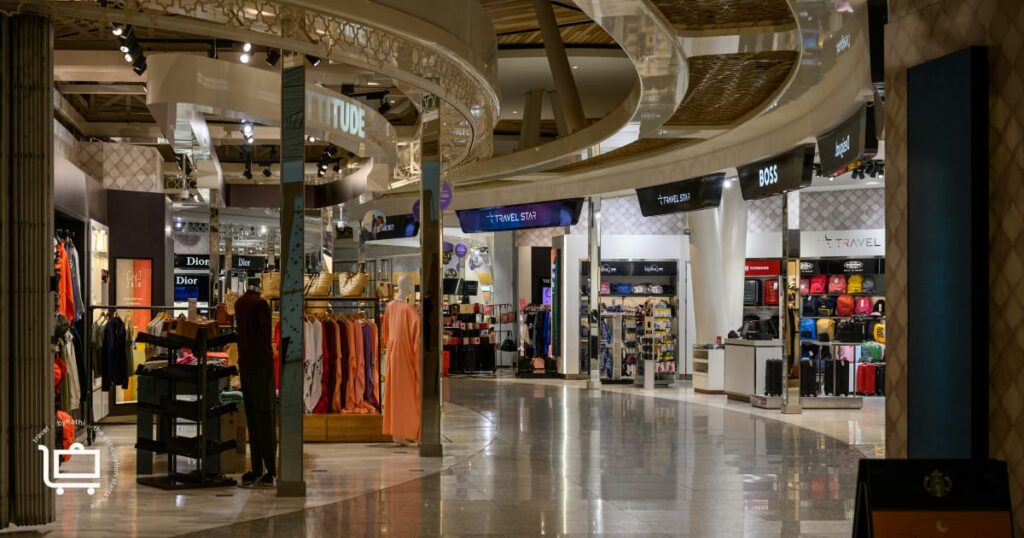
Coming back from Paris, I bought wine at the duty-free shop in the international terminal. I had done what you are supposed to do: bought it after security, in the sealed tamper-evident bag, with the receipt inside. I was carrying it on the plane. I understood, or thought I understood, how this worked.
In Atlanta, going through security on the connection, a TSA agent told me the wine had to come out of the sealed bag and go into my checked luggage. There was a scramble. The bag was sealed. The suitcase was not convenient. Nothing about this moment was smooth.
Here is the thing: the TSA rules actually allow duty-free liquids in carry-on on international connections, provided they are in the original sealed bag and the receipt shows a purchase within 48 hours. The agent in Atlanta was wrong, or at least inconsistent with the policy. This is, apparently, a known phenomenon at US connection points. Some agents enforce the rule correctly. Some invent their own version of it.
I am telling you this so you know: even when you follow the rules, the rules do not always follow you. Buy liquids at duty-free on the way home, put them in your checked bag when you collect it at the international arrival, and recheck it. That is the path of least friction. The carry-on route is technically permitted. It is not always practically simple.
What Duty-Free Actually Is
Duty-free means you are not paying the import taxes and sales taxes that would normally apply to certain goods. When you are leaving a country, you are technically no longer a consumer of that country’s goods, so the government waives the tax on certain categories of purchases. The stores in the international terminal exist specifically to capture that window.
The categories where duty-free shopping tends to offer genuine savings are the ones with the highest tax differentials: liquor, tobacco, and perfume. These are taxed heavily in most countries, so removing the tax produces a meaningful price difference. For everything else, the math is less compelling.
Duty-free does not mean cheap. It means tax-removed. If the base price of something is high, the tax-removed version is still high. And not every duty-free price is actually lower than what you would pay at home or in a regular store. Know what you normally pay before you assume the airport price is a deal.
When It Is Worth Stopping
Liquor you planned to bring home anyway. If you have a specific bottle in mind and the duty-free price is lower than what you would pay at home, this is the right place. Buy it on the way out, not the way in. If you buy it going into Europe and carry it home, it becomes dutiable at the US end.
Fragrance and cosmetics. Major brands are often genuinely less expensive at duty-free than at a US retailer. If you wear a specific fragrance regularly and know what you normally pay, it is worth checking.
Tobacco. Significant savings if you smoke. Irrelevant if you do not.
Everything else. Chocolate, local food products, gifts, souvenirs: buy these in the city, where the selection is better, the prices are often lower, and the experience of buying them is part of the trip.
One practical tip: You cannot guarantee that the specific whisky or the exact perfume you want will be available at duty-free when you are leaving. And once you are past security heading to your gate, you cannot go back to get the bottle you saw in the city. So here is a habit worth building: on arrival, before you clear the international terminal, swing through the duty-free store and take a quick inventory. Note what is there, what the prices are, and whether anything on your list is in stock. Then you know what to expect on the way home. Two minutes of reconnaissance saves a lot of disappointment at departure.
The VAT Refund: A Different Thing Entirely
Duty-free at the airport and the VAT refund are often confused because they both happen near the departure gate. They are different mechanisms.
Duty-free is a purchase you make at the airport specifically to avoid paying tax. The transaction happens there, at tax-free prices.
The VAT refund is a tax you already paid inside the country, at a regular store, that you are entitled to reclaim when you leave. Italy charges VAT of up to 22% on most goods. As a non-EU visitor, you can get a portion of that back.
Here is how it works. When you make a purchase over 70 euros at a single store on the same day, tell the store before you check out that you want a tax-free form. They fill it out with your passport information, you take it with you, and you present it at the customs office at the airport before you leave the EU. Customs stamps the form after verifying you have the goods. Then you collect the refund, either immediately at a refund desk at the airport or later by mail or credit card.
After fees, you typically get back 11 to 15 percent of the purchase price. On a 300-euro leather bag, that is 33 to 45 euros. On a 700-euro purchase, it is 77 to 105 euros.
The part people miss: Do not put your VAT purchases in your checked luggage before you go through customs. The customs agent needs to physically see the goods to stamp your form. If the items are in a checked bag, you cannot show them. Go to the customs desk first, get your forms stamped, then check your bag. The VAT desk at most major European airports is before security. Allow extra time.
One more thing: The items must be unused. Still in original packaging, tags on, unworn. If you wore that new scarf on the train back to the airport, the refund is gone.
We did our first VAT refund coming home through Dublin after Ireland. The process is straightforward once you know it exists. The stores do the heavy lifting if you ask at checkout. All you have to do is show up at the airport with the documents and the goods.
If Your Airport Has US Preclearance, the Sequence Changes
At most international airports, the flow is simple: check in, go through local security, and you are in the international departure zone with your gate, your duty-free shops, and any VAT refund desk all in the same area. That is the standard model.
A handful of airports operate differently because they host US Preclearance facilities, where US Customs and Border Protection officers are stationed to clear you before you board rather than when you land. The practical benefit of Preclearance is that you arrive in the United States as a domestic passenger, skip the immigration line entirely, and your bags check through to your final destination. It is a genuinely useful arrangement, particularly if you have a tight connection.
The airports that have it are not random destinations. As of 2025, US Preclearance exists at 16 locations across six countries: both airports in Ireland (Dublin and Shannon), nine airports across Canada, Abu Dhabi in the UAE, Nassau in the Bahamas, and Bermuda. Ireland is the only country in Europe with the facility. If you are flying home to the US from any of these airports, your departure sequence has an additional step.
At Dublin, which is the one I know from experience, the sequence works like this: check in, go through regular Irish airport security, and you emerge into the full terminal shopping area with duty-free, restaurants, bars, and the VAT refund drop box. That is your window. Do everything you need to do there. Then, when the flight information screens indicate it is time, you proceed to US Preclearance, which involves a second security screening to American standards and a CBP officer checking your documents. Once you are through that checkpoint, you are in a much smaller post-Preclearance zone with limited options: a small shop and a café, and that is it.
The key thing to know is that the VAT bin and the duty-free stores are on the open-terminal side, before Preclearance. Someone who knew Dublin told me before our Ireland trip to do the shopping and drop the VAT forms before going through. That tip saved us. If you are flying home through any airport with Preclearance, check the terminal map in advance so you know exactly where the duty-free and VAT desk are relative to the checkpoint.
The reason I bring this up in a duty-free article: at most airports, if you forget something or run out of time, the worst outcome is you miss the shop. At a Preclearance airport, the checkpoint itself is the cutoff. Everything on the departure side needs to happen before you walk through it: shopping, VAT drop, a last meal.
What to Know Before You Go Home
US Customs has its own rules on what you can bring back duty-free from abroad. The personal exemption is $800 per person for goods purchased outside the US. Anything above that may be subject to US import duty. This is separate from the European VAT refund.
If you are buying significant amounts, know your total. Most personal purchases do not trigger meaningful US duty even above the threshold, but it is worth knowing the number before you are standing at the customs form wondering what to write.
The duty-free shop is not a trick. It is not a guarantee of savings either. It is a tax-status designation on a specific category of purchases in a specific location. Knowing what it is means you can make the decision deliberately rather than by assumption.
And if you spent real money on real goods during the trip, do not leave without filing your VAT form. It is your money. Take it back.