Something going wrong on an international trip is not inevitable. But it happens, and the travelers who handle it well are almost always the ones who thought about it before they left. The key is not to panic. Most of these situations have a path through them. The path is shorter and clearer when you have already mapped it from home.
You cannot plan for every eventuality, but you can put safeguards in place that make almost any situation more manageable. That is what this article is about.
If Your Wallet or Phone Is Stolen
These two situations used to be separate. They are not anymore. A lot of people keep a physical wallet attached to their phone case, and a phone snatch can mean losing both at once. But even without a physical wallet, most of us carry our financial lives on our phones now. Apple Pay, Google Pay, cards stored digitally, banking apps. A stolen phone is a stolen wallet whether or not there is anything attached to the back of it.
The first thing to do is call your bank. Which raises an obvious problem if your phone is what was taken.
You have options. Every hotel has a phone at the front desk and most will let you make an international call in this situation without hesitation. Your concierge is the right person to ask first. Fellow travelers are another resource, and most people are genuinely willing to hand over their phone for a call like this. If you are at or near a police station filing a report, ask there too. You will find a phone. It may take a few minutes longer than you would like, but you will find one.
Most major banks have a 24-hour international line. This is not the number on the back of the card, which is often a domestic line only. Find the international assistance number for each card you plan to bring before you leave home. Save it in your email, write it on a small piece of paper, and tuck that paper in your suitcase separate from your wallet and phone. That piece of paper may be the most useful thing you packed.
If you are traveling with someone who still has funds, you are not stranded. This is one of the primary reasons to travel with two cards from two different networks kept in separate places. If you are traveling alone, your hotel is your anchor. They have seen this before. Tell them what happened. They will help you figure out the next step.
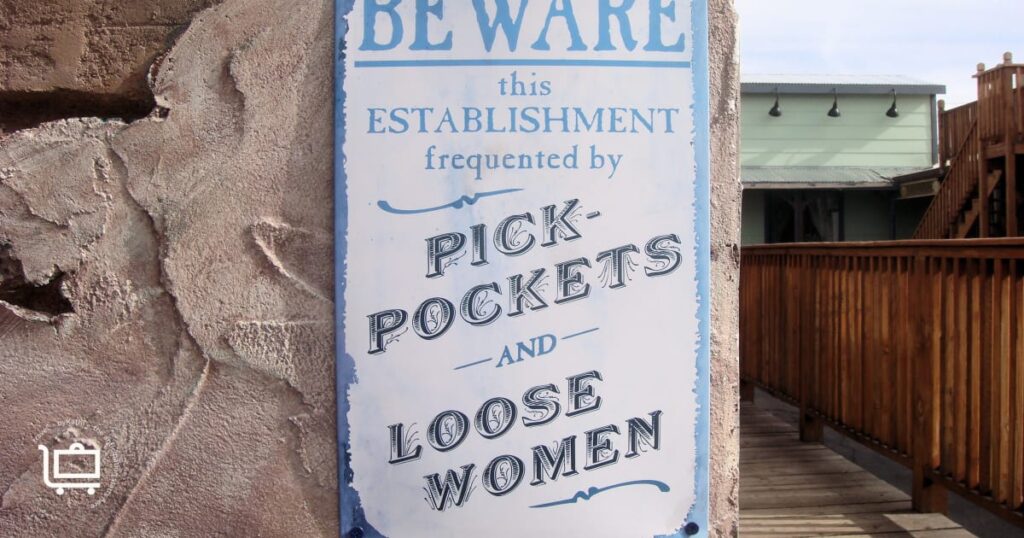
File a police report. Even if recovery is unlikely, you will need it for any travel insurance claim. And your concierge will probably insist on it. Ours did, with the particular civic indignation of someone who loves his city and has watched too many visitors leave it badly. These pickpockets are damaging something, he was saying, not just your afternoon. The report may not get your phone back. The pattern of reports is what eventually changes anything. So you go.
One more thing worth doing before you leave home: go into your phone settings and prevent the Control Center from being accessible when your phone is locked. On an iPhone this is under Settings, then Face ID and Passcode. The first thing a thief does is swipe up to turn on Airplane Mode, which disables Find My immediately. Locking the Control Center takes that away from them. It does not make your phone useless to steal, but it forces them to either power it off entirely or discard it. A powered-off phone is not much use to anyone. It is also temporarily dark for Find My, which is a frustration, but your data and your payment methods stay protected behind your passcode. Make sure you have one. Most people do. Not everyone.
If Your Passport Is Stolen
Go to the nearest US Embassy or Consulate immediately. Bring whatever identification you have.
Before you leave home, take a photo of your passport data page and save it somewhere you can access without your phone: your email, a cloud folder, shared with your travel companion, or left with someone at home who can send it to you. There is conflicting advice about whether to carry a copy of your passport with you or leave it at the hotel. The honest answer is that both have merit. What matters most is that a copy exists somewhere accessible that is not your actual passport. A photo on your phone is better than nothing, but a copy in your email that you can access from any device is more reliable.
If you registered with STEP before you left, covered in Documentation to Sort Before You Leave the Country, the Embassy already knows you are in the country and can prioritize accordingly. The Embassy can issue an emergency passport. Start the process immediately.
If You Have a Medical Situation
For emergencies, 112 is the universal EU number. It works from any phone, including a phone without a SIM card or active service. France, for example, also has specific lines: police is 17, fire is 18, and ambulance (SAMU) is 15. Other countries have their own equivalents. Look up the specific numbers for each country on your itinerary before you go and write them on that piece of paper in your suitcase alongside the bank numbers.
For non-emergencies, go to a pharmacy first.
In France and Italy, pharmacies are genuinely useful in a way that surprises most Americans. The green cross sign marks them throughout both countries. Pharmacists are trained to assess symptoms and recommend treatment directly. You do not need a doctor’s visit for common issues. A sinus infection, a stomach problem, a minor injury, a question about medication. Walk in, describe what is happening, and they will help. They are accustomed to tourists and can usually work around the language barrier well enough to get you what you need.
A pharmacy is not a last resort. It is the right first response for anything that does not require emergency services.
For anything requiring a doctor or hospital, your hotel concierge is the best starting point for a referral to an English-speaking provider nearby.
If Your Phone Is Dead or Gone
This is why the hotel address card matters. If your phone is dead or stolen, you can still show a card to a taxi driver, a stranger, or a police officer and get back to where you need to be. If you have not made those cards yet, Documentation to Sort Before You Leave the Country walks through exactly how.
Offline maps downloaded before you left, covered in Apps I Never Travel Without, work without a data connection. If your phone still functions but you are out of data, offline maps get you back to the hotel.
If the phone is gone entirely, every hotel has a phone at the front desk. Most will let you make a necessary call. Most European cities have wifi in cafes and public spaces. You are not as stranded as it feels in the first moment.
The Honest Truth About Travel Insurance
We almost never buy it. For years our reasoning was that our credit cards offer travel insurance, and they do. But what most people do not realize is how much that coverage varies by card, and what it consistently does not cover.
The gap that matters most for international travel: most credit cards do not cover emergency medical expenses abroad. Your US health insurance usually does not either. A hospitalization in Europe can be expensive. A medical evacuation can cost tens of thousands of dollars. Credit card travel benefits, even good ones, typically fall short on this.
The other gap worth knowing: cancel for any reason coverage is not available through credit cards at all. Standard trip cancellation through a credit card covers specific approved reasons: illness, death in the family, severe weather. If you want to cancel because your plans changed, or because the world shifted, or because you just cannot go, that requires a standalone policy with a CFAR add-on.
My brother-in-law bought a policy for a trip to Greece and was grateful he did. A sinus infection became complicated because this was right after Covid, and he needed to prove he was Covid-negative in order to leave Greece and return to the US. The insurance handled it. Without it, that situation would have been significantly more difficult and expensive to navigate.
My parents, who traveled extensively in their seventies, always purchased travel insurance. The coverage that mattered most to them was repatriation: what happens logistically if something goes very wrong while you are far from home. That is a deeply personal calculation. It is worth thinking about.
What to know before you buy:
CFAR coverage must be purchased within 10 to 21 days of your initial trip deposit. That window is real and enforced. After that, you can still buy a policy, but cancel for any reason will not be available to you.
Understand what you are actually protecting. If an airline cancels your flight, they are typically required to refund your money in cash if you request it. Insurance to protect against losing flight costs is largely redundant in that scenario. What insurance actually protects in a custom-planned trip is the larger exposure: hotel deposits with cancellation fees, pre-purchased tickets and tours, the components of your itinerary that come with their own cancellation policies and do not automatically refund.
What does it cost? As of this writing, comprehensive travel insurance typically runs 4 to 8 percent of your prepaid, nonrefundable trip costs. For a trip where the non-refundable exposure is around $10,000, that is roughly $400 to $800. Adding CFAR increases the premium by another 40 to 50 percent, and CFAR reimburses 50 to 75 percent of your costs if you cancel, not 100 percent. These numbers will shift over time, so check current rates before you rely on them. What tends to stay consistent is the math: for a trip you have invested real money in, the insurance premium is usually less than one percent of what you spent. Whether that is worth it depends on what you have committed to in advance and how you feel about risk.
The message is not to always buy it. The message is to understand what your policy actually covers, what your credit card actually covers, and what your real non-refundable exposure is. Then decide.
One More Thing
Most of the time, when something goes wrong abroad, the people around you step up. The concierge who stays on the phone with you until the cards are canceled. The fellow traveler who hands you their phone without hesitation. The pharmacist who figures out what you need despite the language gap. The police officer who files a report they probably cannot act on, because someone asked them to.
The world is mostly full of people who want to help when things go sideways. That does not make the hard afternoon easier in the moment. But it is worth remembering when you are standing on a street in a foreign city trying to figure out what to do next. You are not as alone as it feels.