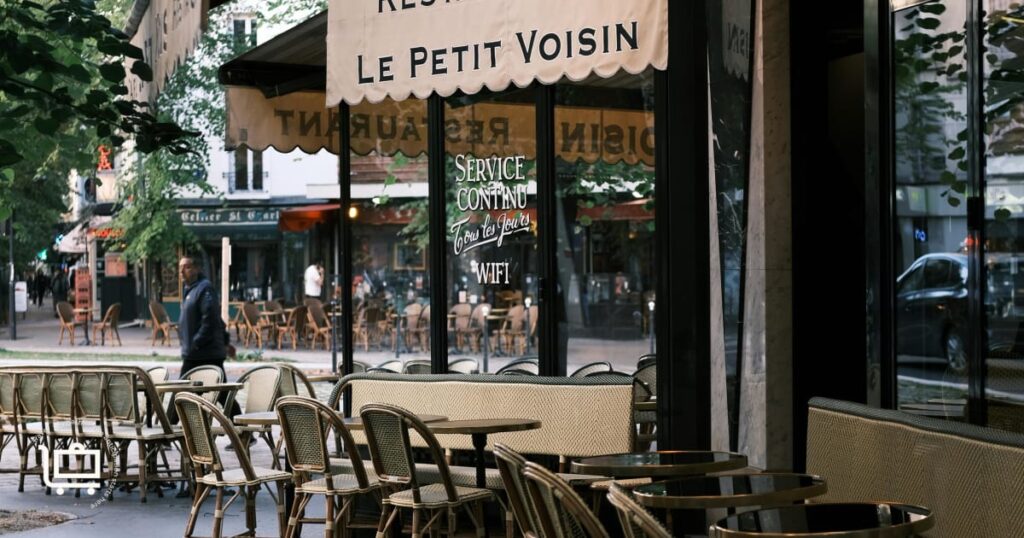
Nobody expects you to be French. Paris is not asking you to pass for Parisian. What it does respond to is a small amount of effort, a basic level of awareness, and the willingness to meet the city where it is rather than expecting it to reorganize itself around you. These paris etiquette tips are not about performing Frenchness. They are about reading the room.
That is a low bar. It feels higher than it is, mostly because Paris has a reputation for being difficult. It is not difficult. It just has its own way of doing things, one that predates your arrival and will continue long after you leave. Meet it where it is and it opens up considerably.
Start With Bonjour
Walk into any shop, bakery, cafe, or small restaurant and say bonjour. When you leave, say au revoir. Two words, and the difference in how people respond is immediate and noticeable. You are not a tourist demanding service. You are a person entering someone’s space and acknowledging them. That distinction matters in Paris in a way that it does not matter everywhere.
Beyond bonjour, you need about six words and a willingness to look up the rest. Merci, s’il vous plaît, excusez-moi, and où sont les toilettes cover most of the situations you will actually find yourself in. The French appreciate the effort even when the pronunciation is rough. Making the attempt signals something. Not trying at all signals something else.
For everything beyond those basics, a translation app will do most of the heavy lifting. There are several good ones, and most work in both directions: type or speak, get a response back. A less obvious feature worth knowing is the camera mode. Point your phone at a menu, a sign, a note on a door, and it translates in real time. Download the French language pack before you leave so it works offline. And practice the camera feature at home first. The first time you use it should not be in front of a waiter while your table is waiting on you. The full list of apps worth having before you land is in Before Paris Do This on Your Phone.
One small thing worth knowing before you go: when a French cashier holds up fingers to indicate a number, they count starting with the thumb, not the index finger. A thumb up is one, not the thumbs-up you might expect. Small thing, briefly confusing, now you know.
How People Dress
Europeans dress to go out. Not formally, but intentionally. There is a difference.
Athletic wear is for athletics. Workout clothes, yoga pants, sneakers that are clearly exercise sneakers: these are for the gym or the run, not for walking into a boulangerie or sitting down to dinner. You will not be turned away anywhere. You will just stand out in a way that is entirely avoidable, and you will probably feel it.
What Paris actually requires is not much. Jeans or non-jean pants, a top that was chosen rather than grabbed, shoes that look like they belong on a street. One outfit that could pass for a nicer dinner. That is the whole standard. Not fancy. Nicer than home. That is exactly right.
If you want more on this, the packing specifics for Paris are in What Goes in the Bag for Paris.
The Restaurant Has Its Own System
There are a few things about French restaurants that will feel wrong until they feel right, and the easiest way to get there is to know them before you sit down.
The check does not come until you ask for it. When you are ready, catch your server’s eye and say l’addition, s’il vous plaît. This is not inattention. You have the table, you have the time, and no one is counting the minutes. The pace of a French meal is by design, and it is one of the better things about eating in Paris once you stop waiting for something to happen.
When you want to get your server’s attention, a raised hand and excusez-moi is correct. American cinema has not done us any favors here. Calling out garçon is genuinely rude, and your server will know it.
Water is not automatic. When asked, say l’eau, which sounds like the English word “low.” Still is naturelle, sparkling is gazeuse or pétillante. The bottle will be opened at the table in front of you. There are no free refills, ice is not standard, and beverages come cold regardless.
Plates are not cleared until the whole table is done. This is not a lapse. The meal is not over until the meal is over.
The service charge is included in your bill by law. You will see service compris printed somewhere on it, which means the 15 percent is already there. Rounding up to the nearest euro, or nearest ten if the meal was exceptional, is appropriate and appreciated.
In France, waiting tables is a profession people pursue. It carries a different weight than it does in the American system, where service jobs are often transitional. The rhythm you will notice at the table reflects that. Your server is not neglecting you between courses. They are doing their job, which is to let you have your meal without interruption. It is a different system, and once you adjust to it, you start to wonder why everything else moves so fast.
The money details are in Everything That Costs a Coin in Paris: what service compris means in full, tipping beyond the restaurant, and coins for coat checks and restroom attendants.
The Pace of Things
Paris does not rush. The meal takes as long as the meal takes. The service at the boulangerie is efficient but unhurried. The person in line ahead of you is not going to speed up because you are in a hurry, and the correct response is to stop being in a hurry.
Something shifts around day two or three. You stop tracking the time between courses. You stop watching to see if the server noticed you. You start actually talking to the people at your table. The pace stops feeling slow and starts feeling correct. By the time you leave, you will find yourself mildly annoyed at how fast everything moves at home.
For staying aware of what is happening around you on the ground, Petitions, Protests, and Pickpockets: Paris Safety has you covered before you walk out the door.