Paris is one of the safest major tourist destinations in Europe. A few things about it are worth knowing before you walk out the door.
Pickpockets Are Real, and They Are Very Good
Paris is one of the most visited cities in the world, and the tourist areas attract skilled pickpockets. This is not a warning to make you paranoid. It is a warning to make you prepared.
Keep your items zipped and close to your body. Carry only what you need for the day. Leave your passport and extra cards at the hotel. A crossbody bag with a secure zipper is the right bag for this trip — the full case for it is in Keep Your Hands on Your Bag: Staying Safe in Europe. And then actually use it. Zip the zippers. Close the closure. The bag does not protect you by existing. The features only work if you engage them, every time, especially on the Metro and in crowded areas near the major attractions.
Be particularly alert when Metro doors are closing. That is a common moment for a quick grab.
Despite all the preparation we did before our 2022 trip, it happened to one of us. Not because we were careless. Because skilled pickpockets are skilled. What the preparation did was give us a framework for handling it without panic. What to do next is in When Something Goes Wrong Abroad.
The Buddy System
Before we left, we made it a rule: no one alone. Partner changes during the day were intentional and communicated. Everyone carried hotel address cards — if you have not made those yet, Documentation to Sort Before You Leave the Country explains exactly how — and had offline maps downloaded before we left. Apps I Never Travel Without and Before Paris, Do This on Your Phone cover which apps to have ready.
Clear protocols mean less panic when something goes sideways. For a group of twelve people with different travel experience levels, this was the single most useful structural decision we made.
The Scams That Run Near the Tourist Sites
Paris has specific distraction scams that concentrate around the same locations: Sacré-Cœur, the Eiffel Tower, the Louvre entrance, and the major bridges along the Seine.
The petition: Someone approaches with a clipboard and asks you to sign a petition — for children, for the environment, for something that sounds reasonable. While you are reading or signing, a partner moves on your bag. If someone approaches you with a clipboard near a tourist site, the answer is no and keep moving. A raised hand and a non-stop is enough.
The bracelet: Someone approaches and begins tying a friendship bracelet around your wrist before you have agreed to anything. Once it is on, they demand payment. The moment to stop this is before the bracelet goes on. If you see someone moving toward your wrist, step back and keep walking. If a bracelet does end up on your wrist, you are not obligated to pay for something you did not ask for.
Both operate in the open and in plain sight. Knowing they exist is most of the protection.
Protests
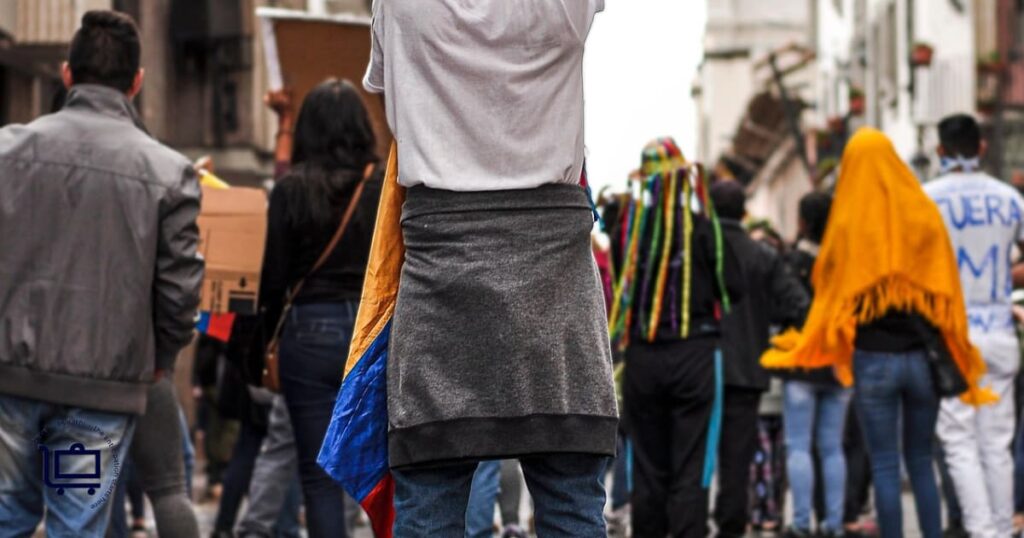
The French exercise their right to protest with some regularity, and Paris is where those protests tend to land. We have encountered them on trips going back to 2011 when we were traveling with our boys, and explaining what was happening turned into one of those useful travel moments. They take it seriously. They are loud. But they are organized, and they are generally peaceful. This is not a safety concern. It is part of how France works.
If you encounter a protest, cross the street and give it space. Do not walk through or linger near the edges out of curiosity. CityMapper and Google Maps will often route around active disruptions. If you are relying on transit and something feels off, check the app for alternate routes before you commit to a platform.
The French love their freedom to get vocal. It is not a reason to change your plans. It is just a reason to be aware of what is happening around you on a given day.
The Gendarmes Are There for You
Uniformed officers are a visible and regular part of the Paris landscape at tourist sites, on major streets, and near landmarks. The first time we went, seeing officers openly carrying rifles near Notre-Dame stopped us in our tracks for a moment. It takes a beat to register as normal. It is routine.
Paris takes the security of its tourist infrastructure seriously, and the visible presence is intentional. If something happens and you need help, they are there and they will assist you. Do not be unnerved by it. It is part of why Paris remains one of the safest major tourist destinations in Europe.
Crossing the Street Is Not What You Expect
French law requires drivers to stop for pedestrians showing a clear intention to cross. Paris traffic has its own opinions about this. Look both ways, look again, and when it is your turn, cross quickly.
Paris is also one of the most bike-friendly cities in the world. Bike lanes are active and bikes move fast. Many intersections have a second smaller traffic light specifically for bikes and mopeds. When it is their turn, they go. Pay attention to it.
Pharmacies Are Excellent
French pharmacies are marked everywhere by a green cross sign and they are genuinely useful for minor health issues. Pharmacists in France are trained to assess symptoms and recommend treatment directly, without a doctor’s visit for common issues. If something small goes wrong during the trip, a pharmacy is your first stop. They are accustomed to tourists, they are helpful, and they can usually work around the language barrier well enough to point you toward what you need.
For anything beyond a pharmacy, When Something Goes Wrong Abroad covers what to do next.
And if you want to know what to do about money — what it costs, where to get it, and when cash is the only option — Everything That Costs a Coin in Paris has you covered. For reading the room and moving through the city like someone who belongs there, Fitting In in Paris is worth a read before you go.