The general safety picture for European travel is covered in Keep Your Hands on Your Bag: Staying Safe in Europe — pickpocketing patterns, ATM safety, distraction scams, and what to do if something goes wrong. Read that one first. Italy fits that picture, and a few things are worth knowing specifically before you arrive.
At the Train Station: Keep Your Hands on Your Bag
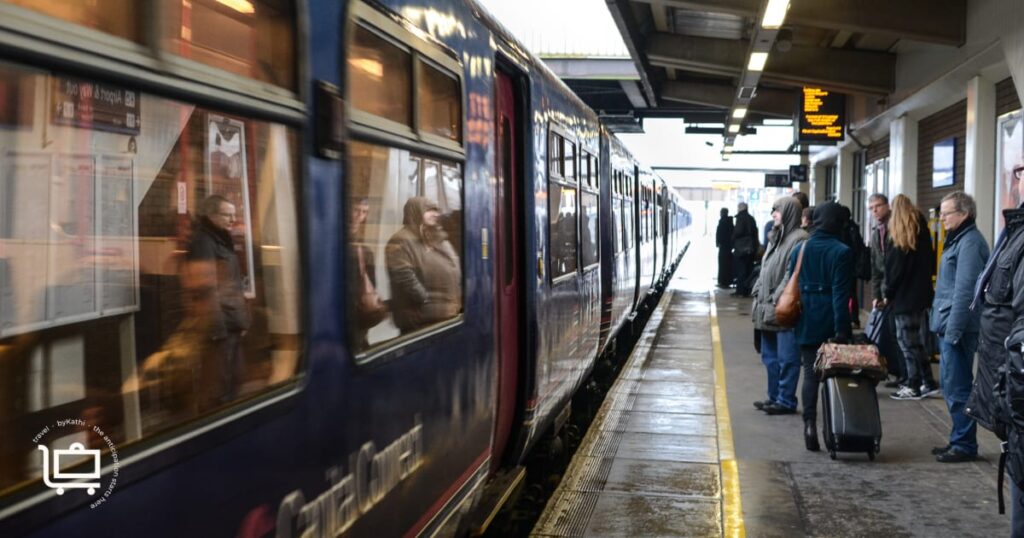
The major Italian train stations, Roma Termini and Napoli Centrale especially, are busy, crowded, and worth an extra layer of awareness. They are also where one of Italy’s most common tourist situations plays out.
Someone approaches as you are loading your bag onto the train or lifting it to the overhead rack. Before you can respond, they have grabbed it and are hoisting it for you. It is framed as helpfulness. At the end of it, they stand and wait for a tip.
This is not violent. It is not threatening. But it is not a service you asked for, and the expectation of payment is real. The moment to stop it is before the bag leaves your hands. A firm grip on your luggage and a polite but clear “no grazie” is enough. If it has already happened and someone is waiting, you are not obligated. A small coin if you genuinely want to acknowledge it, nothing if you do not.
This pattern is most common at station entrances and on the platforms at the busiest stations. Once you have seen it once, you will recognize the approach immediately. Until then, just keep your hands on your bag.
The Rules That Come With Fines
Several Italy-specific rules carry real financial consequences for tourists who do not know them.
Train ticket validation. This one is more nuanced than it used to be, so let us be clear about what actually applies to you.
If you book through the Trenitalia or Italo app, which is what we recommend in Your Italy Trip Right in Your Pocket, you almost certainly have an electronic ticket with a QR code. For high-speed trains like Frecciarossa and all Italo trains, no validation is needed. Just show the QR code. For regional digital tickets booked online or through the app, Trenitalia automated the validation process as of late 2024. Your ticket validates itself at the scheduled departure time. You still need to show the QR code when asked.
The validation rule that catches people is specific: if you buy a paper ticket at a station window or ticket machine for a regional train, you must physically stamp it in the yellow or green validation machine on the platform before you board. That machine is easy to miss if you are not looking for it. Inspectors board trains in progress, check tickets, and fine passengers on the spot. Ignorance is not a defense and there is no grace period. If you are holding a paper regional ticket, find the machine before you board.
The simplest way to avoid the whole question: book through the app, travel with a QR code, and you are covered.
Counterfeit goods. You can tell. That is the honest truth. If someone is selling what looks like a Gucci bag or Prada sunglasses off a blanket on the street for twenty euros, it is fake. Italy fines the buyer alongside the seller, and the fines are not small. A 2024 law increased the penalties and strengthened enforcement, particularly in Rome, Venice, and Florence. The fine for purchasing counterfeit goods can reach into the thousands of euros, and “I didn’t know it was fake” is not a legal defense. The price tells you what you need to know. Walk past.
Both of these rules are covered in more depth in Italy’s Unwritten Rules.
If You Are Buying the Real Thing
Italy takes the quality of its goods seriously enough to hold buyers accountable for fakes. That same pride is exactly what makes buying the real thing worthwhile. If you are shopping for quality Italian goods and want to understand the VAT refund and how duty-free actually works, that is all in What Duty-Free Actually Means (And When It Actually Matters).
City-by-City Awareness
Italy is not one uniform safety environment, and it is worth calibrating your awareness accordingly. Rome and Naples are large, dense, heavily touristed cities, and they carry the same petty theft risks as any other major metropolitan area in the world. They are not uniquely dangerous. They just require the same situational awareness you would bring to any big city: bag in front on the metro, phone not dangling in your hand in a crowd, attention on what is happening around you in busy tourist corridors.
Palermo and Catania, in our experience and based on what we have read, run at a lower level of ambient tension. Florence and Venice fall somewhere in the middle.
One thing worth naming directly: Italy is also a culture where people stop. They stop in the piazza to visit. They stop at the bar for a coffee and a conversation. They stop on the street to greet someone they know. That is not carelessness. That is Italy, and it is one of the best things about being there. The awareness we are talking about applies to transit situations, crowded tourist corridors, and train station platforms, not to the neighborhood, not to the piazza, not to the afternoon. My mom always said to walk with purpose, and that is good advice for getting through a busy station. It is not the right posture for a Sunday morning in Trastevere.
Who to Call
If something happens in Italy, 112 is the universal EU emergency number. It works from any phone, operates in multiple languages, and routes to whichever service you need. Italy also has specific lines: police is 113, fire is 115, and ambulance is 118. All of them remain active alongside 112. For most situations a tourist might encounter, 112 is the right first call.
Italy has two main law enforcement bodies you may encounter: the Carabinieri (military police, dark blue uniforms) and the Polizia di Stato (state police, lighter blue uniforms). Both handle tourist assistance and both can help you file a police report. If you need to make an insurance claim for a stolen item, the report is required. Ask your hotel for the nearest station if you are not sure where to go.
Italy rewards preparation. Not because it is complicated, but because it is specific. The train you are on, the ticket in your hand, the bag leaving your grip at the platform, the vendor whose price makes no sense for what they are supposedly selling. None of these situations are traps for people who are paying attention. They are just moments where knowing what to expect ahead of time changes the outcome entirely.
Go knowing. The rest of it is just Italy.